
Why Embossing Makes Leather Stronger and More Structured
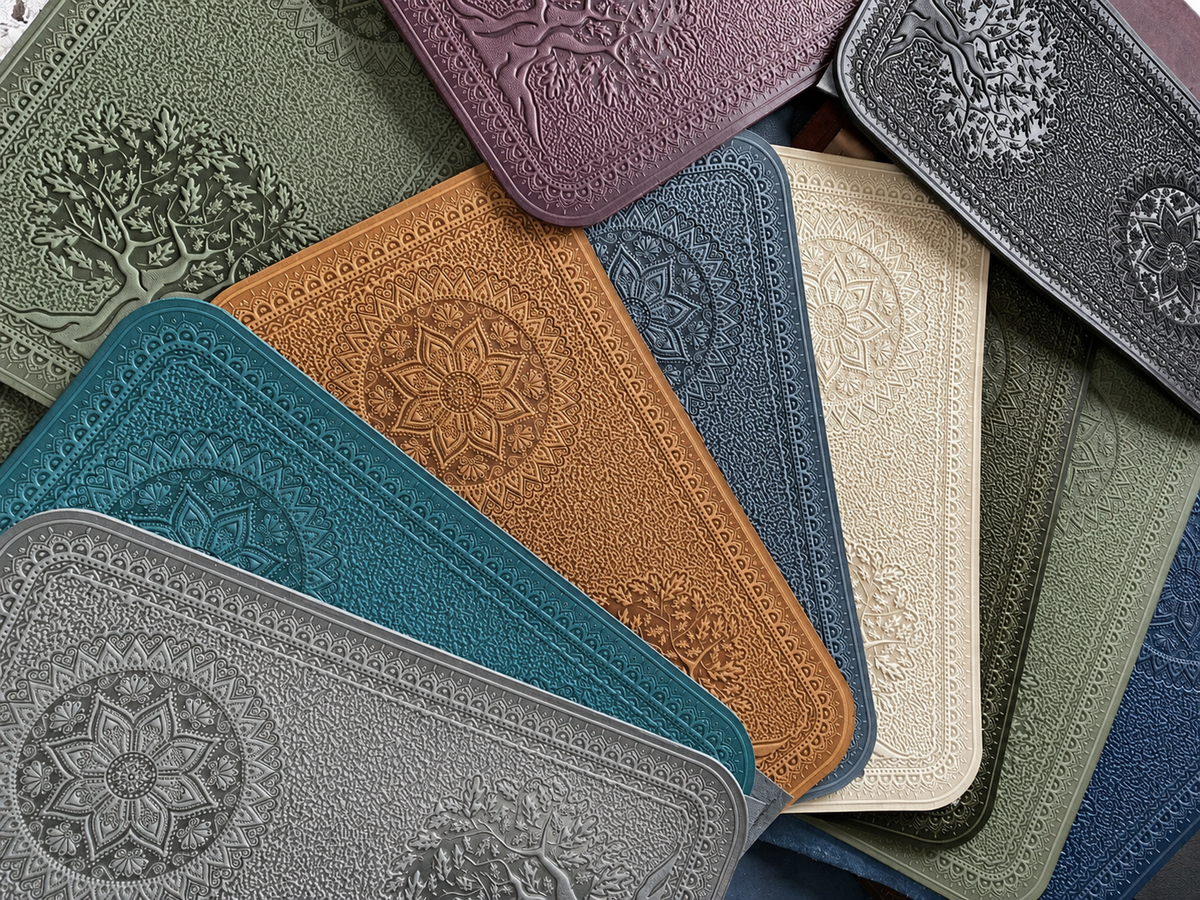
Embossing is usually thought of as a decorative process.
You see a floral pattern, a geometric border, a landscape, or a deeply textured surface and naturally focus on the design.
But embossing changes more than appearance.
When leather is compressed under controlled pressure, heat, and airflow, its physical structure changes too. The fibers become more compact, the surface becomes denser, and the material can become noticeably firmer and more resistant to deformation.
That is why embossed leather often feels more structured than the same leather before embossing.
What happens to leather during embossing?
Leather is made from a network of natural fibers.
Before embossing, those fibers retain the flexibility and structure created during tanning and finishing.
During embossing, the leather is pressed against a patterned surface under controlled conditions.
The pressure compresses the material.
That compression reduces some of the internal space between fibers and increases density in the affected areas.
The leather is not simply being marked.
It is being physically reshaped.
Why density matters
Density influences how leather behaves.
A denser piece of leather generally resists deformation more than a softer, looser structure.
After embossing, the leather can feel:
-
firmer
-
more compact
-
more structured
-
less prone to collapsing
-
more resistant to bending in certain directions
This change can be especially noticeable with deep embossing.
The pattern creates raised and recessed areas, and the compressed surface develops a more defined structure.
Embossing can increase stiffness
Stiffness is not always desirable.
A tote, for example, often benefits from a softer and more flexible body.
A structured handbag, on the other hand, needs enough firmness to hold its intended shape.
Embossing can help create that firmness.
By compressing the leather, the process reduces some of its natural softness and gives the material more body.
The result is leather that can feel more architectural.
It holds edges more clearly.
Panels resist folding as easily.
The finished product maintains its silhouette more effectively.
Why this is useful in handbags
A handbag experiences constant structural stress.
The body supports its own weight, the hardware, handles, closures, and everything carried inside.
If the leather is too soft, the bag may sag or collapse.
Embossed leather helps resist that.
The additional density and stiffness created during embossing can make the panels more stable.
That is particularly valuable in designs where the shape of the bag is part of its visual character.
Why embossed leather can feel stronger
“Stronger” does not mean embossing magically transforms poor leather into high-quality leather.
The quality of the original hide still matters.
But when good full-grain leather is compressed properly, the material becomes more resistant to certain types of movement and deformation.
That can improve how it performs in everyday use.
The leather may resist stretching more effectively.
Edges can remain sharper.
Large panels can retain their shape better.
The surface can feel more substantial.
These are practical benefits, not just visual ones.
Pressure is the key factor
The amount of pressure used during embossing directly affects how much the leather is compressed.
Too little pressure and the pattern may be shallow or inconsistent.
Too much pressure can damage the surface or make the leather unnecessarily rigid.
The correct pressure creates a clean pattern while preserving the material’s integrity.
This balance is one of the most important parts of the process.
Temperature helps the structure set
Heat helps the leather accept and retain the embossed shape.
Under controlled temperature, the fibers respond more readily to pressure.
The pattern becomes more defined and the compressed structure stabilizes more effectively.
But temperature must be carefully controlled.
Too much heat can dry the leather or affect the finish.
Too little heat may produce weaker definition.
The goal is not maximum heat.
It is the correct heat for that particular leather.
Airflow matters too
Airflow helps regulate the environment around the leather during the process.
Leather reacts to heat and moisture, so controlled airflow helps manage how the material stabilizes after compression.
Pressure, temperature, and airflow work together.
Changing one variable affects the others.
That is why embossing is a controlled technical process rather than a simple stamping operation.
Different leather types respond differently
At Motif, we use approximately 4 mm cowhide for handbags, purses, backpacks, and belts, and approximately 2 mm goatskin for totes and wallets.
These leathers respond differently under embossing.
The thicker cowhide has more body and can support deep, highly structured patterns.
The thinner goatskin is more flexible and requires a different balance of pressure and heat.
The objective is always the same:
create clear definition without compromising the leather.
Color also changes the process
Leather color influences how the material behaves during embossing.
Different dyes and finishes can affect how the surface responds to heat and pressure.
That means the same settings cannot always be used across every color.
Motif works with 21 colors, so the embossing process has to be adjusted accordingly.
The goal is consistency in pattern quality while respecting the individual behavior of each leather.
Deep embossing creates more structure
A shallow texture changes the surface only slightly.
A deep embossed pattern creates a more substantial transformation.
The leather is compressed more dramatically in some areas than others.
This creates stronger differences between raised and recessed sections.
The result is not only more visual depth.
It also creates a more rigid and dimensional surface.
That additional structure can help the leather hold its shape over time.
Why edges look more defined
One of the most noticeable effects of embossing is improved edge definition.
A softer leather can have a more relaxed appearance around seams and panel edges.
Embossed leather often appears crisper.
The compressed material gives the panel more resistance.
Lines stay cleaner.
Corners feel sharper.
The finished object looks more deliberate and structured.
Embossing affects how a bag ages
All full-grain leather changes with use.
It softens.
It flexes.
It develops a patina.
Embossed leather does the same, but the added density means it often retains more of its original structure while aging.
The leather can become more supple without losing the embossed pattern.
Raised areas may become smoother.
Recessed areas may retain more contrast.
The surface develops character while the overall shape remains stable.
Stronger does not mean rigid
One important distinction is that embossed leather should not feel like plastic.
Good embossing still preserves the natural character of leather.
The material should remain flexible enough for everyday use.
It should bend.
It should soften.
It should respond to handling.
The goal is controlled structure, not artificial stiffness.
Why the process matters
Embossing only improves leather when it is done correctly.
Poorly controlled pressure can flatten the material too much.
Excessive heat can damage the surface.
Improper settings can create uneven patterns or overly stiff sections.
That is why every batch requires attention.
The leather type, thickness, color, and pattern all influence the final settings.
More than decoration
Embossing changes the way leather looks.
But it also changes the way leather behaves.
It increases density.
It adds firmness.
It improves shape retention.
It sharpens edges.
It creates structural definition.
That is why embossed leather feels different in the hand.
At Motif, the pattern is not simply decoration added to the surface.
It becomes part of the material itself.
And when the process is controlled properly, the result is leather that is not only more distinctive, but also more structured and more capable of holding its form over time.